


SEO for solicitors is the work of making a law firm's website, Google Business Profile and wider online presence easy to find and easy to trust for people who need legal help. It covers three places where clients now look: the organic results, the local map pack and AI answers such as Google's AI Overviews. Done well, it connects each practice area and office with the searches clients actually make.
Why law firms are different
Legal services sit in what Google calls "Your Money or Your Life" territory. Pages that affect someone's money, family or freedom are held to a higher standard of accuracy and trust, so thin or generic content struggles.
Solicitors also work under SRA rules on how they present prices, complaints and regulatory status. Most searches are local, and each practice area behaves like its own market, with different clients, questions and competitors.
This guide explains how SEO works for UK solicitors' firms and barristers' chambers, area by area. It is written for partners, practice managers and marketing leads deciding where to put their time and budget.
Contents
- How people search for a solicitor
- Choosing practice areas and locations to prioritise
- Start with an audit
- Technical foundations
- Practice-area pages and helpful content
- Local SEO and Google Business Profile
- Trust and E-E-A-T on a law firm site
- Schema for law firms
- Links, directories and digital PR
- AI Overviews and AI answers
- Measuring SEO: enquiries, not rankings
- How long it takes and what it costs
- FAQs
- Next step
How people search for a solicitor
People look for a solicitor in two broad ways. Some need help now and search with a place in mind. Others are trying to understand a problem before they decide whether they need a lawyer at all.
Urgent and local searches
Searches such as "criminal solicitor Southampton" or "conveyancing solicitor near me" come from people ready to act. They want a firm nearby, a phone number and a reason to trust it.
These searches usually show the local map pack above or beside the organic results. Your Google Business Profile, reviews and location pages do most of the work here.
Research-led searches
Questions such as "how long does probate take" or "what happens at a first divorce hearing" come earlier in the journey. The person may not choose a firm for weeks, but the pages they read shape who they contact.
These searches lean towards organic guides and AI answers. Clear, accurate practice-area content is what earns a place in front of them.
How this changes by practice area
Each practice area has its own mix. Criminal, family and personal injury work tends to start with urgent, local searches. Wills, probate, employment and commercial work often start with research.
Conveyancing sits in between, with price and speed comparisons playing a large part. Knowing the mix for each area tells you whether to lead with local SEO, content or both.
Three places to be found
- Organic results: the standard list of web pages, led by your practice-area pages and guides.
- The map pack: the local listings with a map, driven by your Google Business Profile.
- AI answers: summaries at the top of the results that name and link to sources.
A firm that is visible in all three meets clients at every stage, from first question to first call.

Choosing practice areas and locations to prioritise
Few firms push every practice area in every town at once. The firms that make steady progress choose where to focus first.
Start with the work you want more of
List the practice areas that matter most to the firm, then weigh three things for each: how much the work is worth to you, how competitive the searches are, and how ready your current pages are. An area with real capacity, a decent page and moderate competition is often the best place to start.
Match locations to real offices
Local search rewards a genuine presence. Focus on the towns where you have staffed offices, then on nearby places your clients actually come from.
For firms with several offices, each office needs its own profile and location page that reflects the work done there. Our guide to SEO for multi-location law firms covers how to structure this.
Write the plan down
A short written plan keeps the work focused. It should name the priority practice areas, the priority locations and the searches that matter for each.
If you want help shaping that plan, our law firm SEO services start from exactly these choices.
Start with an audit
An audit shows where the site stands today and what to fix first. Without one, effort tends to go into whatever is most visible rather than what matters most.
What a law firm SEO audit checks
A useful audit looks at the site and the search results together. It should cover:
- Technical health: whether search engines can crawl and index the important pages, and how the site performs on mobile.
- Practice-area pages: whether each area has a clear page that answers what clients search for.
- Local visibility: the Google Business Profile, categories, reviews and consistency of the firm's details.
- Trust signals: solicitor bios, regulatory information and the transparency details clients and the SRA expect.
- Competitors: who appears for your priority searches, and why.
Turning findings into priorities
The best audits end with a short, ordered list of actions rather than a long score. Each finding should say what to do, why it matters and roughly how much work it involves.
Our SEO audits go into this depth across the whole site. If you want a first view of your own firm, you can request a free law firm SEO audit and see what it finds.
Technical foundations
Technical SEO makes sure search engines can reach, understand and trust your pages. It rarely gets attention until something breaks, yet every other part of SEO rests on it.
Crawling and indexing
Search engines need to find each important page through internal links and an XML sitemap. Pages blocked by mistake, duplicated across several URLs or left as orphans with no links pointing to them will struggle to appear.
Check that every practice-area, location and people page is indexable and linked from somewhere sensible. Remove or redirect old pages that no longer reflect the firm.
Security and redirects
Every page should load over HTTPS, with one version of each URL. Old addresses, such as pages from a previous site or a merged firm, should redirect cleanly to their closest current page.
Broken links and long redirect chains waste the attention search engines give a site. A regular check keeps them under control.
Speed and mobile
Most people searching for a solicitor do so on a phone. Pages should load quickly, read easily on a small screen and make the phone number and enquiry route easy to reach.
Heavy images, unnecessary scripts and intrusive pop-ups are the usual causes of slow pages. Fixing them helps clients as much as it helps search engines.
Site structure
A clear structure groups pages by practice area and location, with simple URLs and breadcrumbs. Visitors and search engines should be able to tell where they are and what sits above and below each page.
Our technical SEO work covers crawling, speed, structure and the fixes that follow. If you are planning a new website, read about website migrations first, because a rebuild is the point where hard-won visibility is easiest to lose.
Practice-area pages and helpful content
Practice-area pages are where most enquiries begin. A good page answers the questions a client has at that moment, in plain English, and makes the next step obvious.
One clear page for each area
Each practice area deserves its own page, and larger areas often need several. A family law page, for example, may lead to separate pages on divorce, children arrangements and financial settlements.
Each page should explain what the service covers, who it is for, how the process works and how to get in touch. Generic text copied across areas helps no one.
Answer real client questions
The best content starts with the questions clients ask at first meetings and on the phone. Fee earners hear these every day, so their input is the richest source a firm has.
Turn those questions into short guides and page sections. Write the answer first, then the detail, so both people and AI answers can lift the key point.
Fee-earner review and plain English
Legal content needs to be accurate, and it needs to be readable. A simple process works well: the content is drafted in plain English, then a fee earner in that area reviews it before it goes live.
Show who wrote or reviewed each page and when. It helps readers trust the advice and helps search engines connect the page to a real expert.
Keep content current
Law and procedure change, and so do fees and processes. Review key pages on a regular cycle, update them when something changes and show the date of the last review.
Old guides that still attract visits are worth refreshing rather than replacing.
Our content strategy service plans and drafts this work around each firm's practice areas.
Local SEO and Google Business Profile
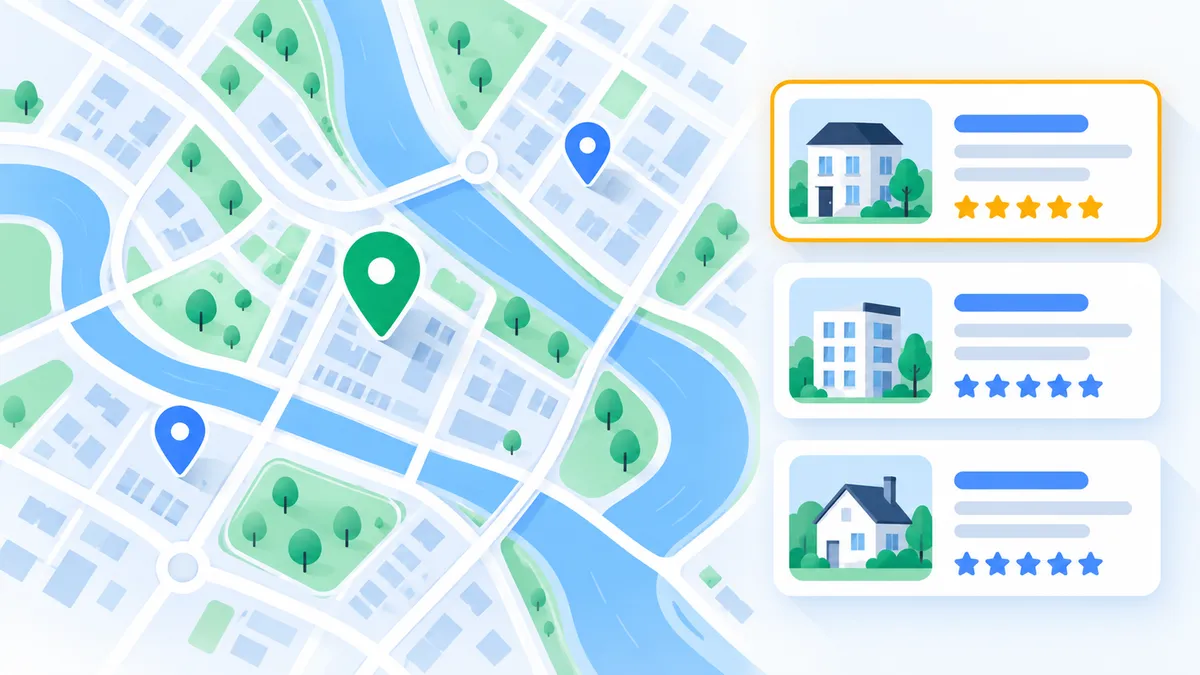
For urgent, local searches, the map pack is often the first thing a client sees. Your Google Business Profile decides whether you appear there and how you look when you do.
Categories and services
The primary category tells Google what the firm does. A practice-specific category, such as one for family or personal injury work, describes the firm far better than a general legal category.
Add secondary categories for other main areas, and list services with short, plain descriptions. Keep them in line with the practice-area pages on your site.
Reviews
Reviews shape both visibility and the decision to call. Ask clients for reviews at a natural point, such as when a matter closes, and make it easy for them.
Reply to reviews, good and bad, in a calm and professional way that keeps client details private. A steady flow of recent reviews tells searchers the firm is active.
Consistent details everywhere
Your firm name, address and phone number should match across the website, Google, legal directories and other listings. Inconsistent details make it harder for search engines to be sure which listings belong to you.
Location pages
A location page tells clients and search engines that the firm serves a place. It should give the office address, how to get there, the practice areas offered from that office and the people who work there.
Avoid pages for towns where the firm has no presence. Thin pages that swap one town name for another help no one and can weaken the site.
Multi-office firms
Each staffed office needs its own verified profile and its own location page on the site. Link each profile to the matching location page rather than the homepage.
What the Hampshire research shows
Affirmed's own Hampshire and Isle of Wight legal digital maturity report looked at how law firms there appear in local search. The map pack appeared on almost every "solicitor in [town]" search, so a strong profile is central to being found.
The research also found that few firms use a practice-specific primary category, and that many leave reviews without a reply. Both are simple, low-cost places to improve. The local map was spread across many different businesses, which shows the map pack is open to firms that put in the work.
Our local SEO and Google Business Profile optimisation services cover each of these steps.
Trust and E-E-A-T on a law firm site
Google looks for experience, expertise, authoritativeness and trust, often shortened to E-E-A-T. For a law firm, these show up in clear, practical details across the site.
Solicitor bios
Every fee earner who advises clients should have a bio page. It should give their role, practice areas, relevant experience and how to contact them.
Link bios from the practice-area pages they support, and from any guides they wrote or reviewed. This connects the firm's content to real, named people.
SRA number and digital badge
Show the firm's SRA number and the SRA digital badge, usually in the footer of every page. The badge links to the SRA's own record of the firm, which clients can check for themselves.
Transparency information
The SRA expects firms to publish certain information on their websites. This includes prices for certain services, such as residential conveyancing and uncontested probate, along with the firm's complaints procedure.
From an SEO point of view, these pages are useful content in their own right. Clients search for prices and processes, and clear, easy-to-find pages answer them.
The SRA's transparency guidance sets out the full list of services and the details to include. Link price pages from the relevant practice-area pages and from the footer, so clients and search engines can always reach them.
Schema for law firms
Schema is structured data added to a page's code. It tells search engines in a precise way what the page is about: the firm, its offices, its people and its content.

The types that matter most
- LegalService and Organization: describe the firm, its offices, contact details and the areas it serves.
- Person: describes each solicitor on their bio page, linked to the firm.
- BreadcrumbList: shows where each page sits in the site structure.
- FAQPage: marks up questions and answers that are visible on the page.
Google no longer shows FAQ rich results for most sites, so FAQPage is about describing the page accurately rather than earning extra space in the results.
Keep it accurate
Markup should always match what visitors can see on the page. Leave out review star markup for your own reviews on your own site, because Google does not show stars for a business's reviews of itself.
Our schema and structured data service sets up and checks this markup across a law firm site.
Links, directories and digital PR
Links from other trusted sites tell search engines that a firm is real and respected. For law firms, the best links come from the legal world and the local community.
UK legal directories
Directories are a big part of legal search. Listings on the Law Society's Find a Solicitor, Chambers and Partners, The Legal 500 and Review Solicitors help clients compare firms and help search engines confirm the firm's details.
Keep every listing complete and consistent with your website and Google profile. Directories often appear in the search results themselves, so a strong listing is visibility in its own right.
Local press and community
Local news sites, business groups, charities and events offer natural links for a firm that is part of its community. Commentary on legal changes, sponsorship of local causes and expert quotes for journalists all earn genuine coverage.
What to avoid
Avoid paid link schemes, low-quality directories created only for links, and large swaps of links with unrelated sites. They add risk and do little for clients.
Our link building and digital PR service focuses on links a firm would be glad to have.
AI Overviews and AI answers
AI Overviews and other AI answers now sit at the top of many legal searches. They summarise an answer and name a handful of sources.
What the research shows about who gets named
In the Hampshire research, AI Overviews appeared on most research-style legal questions and on a minority of local "solicitor in [town]" searches, a share that varied between the two collections. Sources named in those answers included government guidance and law firm pages that answered the question clearly.
Local firms were among the sources cited, which shows a well-written guide from a regional firm can be named alongside national sources.
What helps a firm get named
- Clear answers: put a short, direct answer near the top of each guide, then the detail.
- Entity consistency: use the same firm name, address and descriptions across the site, Google and directories.
- Directories: complete listings give AI systems more consistent information about the firm.
- Schema: structured data helps search engines understand the firm, its people and its pages.
The same work that makes pages useful for people makes them easier for AI answers to use.
Write for the question, not the keyword
AI answers respond to full questions, often longer and more specific than a typical search. Guides that use real client questions as headings, and answer each one plainly, give these systems exactly what they look for.
Keep answers up to date when the law or a process changes. A dated, reviewed guide is easier to trust than one that has not been touched in years.
Measuring SEO: enquiries, not rankings
Rankings move every day and say little on their own. What a firm needs to know is whether search is bringing in enquiries for the work it wants.

What to measure
- Calls: calls from the website and from the Google Business Profile.
- Forms: enquiry form submissions, tracked as events.
- Enquiries by practice area: which areas the enquiries relate to.
- Searches and pages: the searches and landing pages behind those enquiries.
GA4 and Search Console
Call tracking numbers on the website can show which calls came from search, while keeping the main number consistent in listings.
GA4 shows how visitors arrive and what they do, including calls and form submissions when tracking is set up. Search Console shows which searches the site appears for and which pages earn clicks.
Used together, they show which practice areas and pages bring enquiries. Add the firm's own enquiry records, and the picture becomes clearer still.
Enquiry quality
Not every enquiry is the work a firm wants. Recording which practice area each enquiry relates to, and whether it was a good fit, shows which pages bring the right clients.
That insight feeds straight back into content and local priorities for the months ahead.
Reporting that leads to action
A good monthly report covers the work done, the enquiries and their quality, the searches and pages behind them, and the next steps. Our analytics and reporting service sets up this tracking and reporting for law firms.
How long it takes and what it costs
The time SEO takes, and the investment it needs, come from the same set of factors. Every firm's mix is different.
The factors that shape time and cost
- Competition: how many strong firms and directories compete for the same searches.
- Practice area: some areas are far more competitive than others.
- Location: a large city and a market town are different markets.
- Site state: a sound site moves faster than one that needs technical fixes first.
- Content volume: the number of practice-area and location pages that need writing or improving.
How the work is shaped
A firm in a quiet market with a sound site may need focused work on a few pages and its profiles. A firm competing in a busy city across several practice areas needs more content, more local work and more time.
Work can run as a retainer, a project or both, shaped by what the audit finds. An audit is the quickest way to see where your firm sits on each of these. Our pricing page explains how Affirmed shapes the work around them.
FAQs
Is SEO worth it for a small law firm?
Yes, if the firm focuses. A small firm rarely needs to compete everywhere. Choosing a few practice areas and the towns it actually serves lets it build strong pages and a strong Google Business Profile where clients are looking, and the local map pack is open to firms of every size.
Is SEO still relevant with AI search?
Yes. AI Overviews and other AI answers draw on web pages, directories and business profiles to build their answers. The same clear, accurate practice-area content and consistent firm details that help in organic search also help a firm get named in AI answers.
Can solicitors use client reviews?
Yes. Solicitors can ask clients for reviews on Google and legal review sites, and reply to them professionally while keeping client details private. Reviews help clients choose and help the firm appear in local results. On your own website, show reviews as text rather than adding review star markup.
Do I need a separate page for each practice area?
Yes. Each practice area has its own clients, questions and searches, so each needs a page that speaks to them. Larger areas often need several pages, such as separate pages on divorce, children arrangements and financial settlements within family law.
Should we do SEO in-house or hire an agency?
The answer comes down to the skills and time the firm has. Many firms keep fee-earner review and client knowledge in-house, and bring in specialists for technical work, schema, local SEO and reporting. The right mix gives the firm control over what it says and expert support on how it is found.
Where should a law firm start with SEO?
Start with an audit. It shows how the site performs today, which practice areas and locations have the most room to grow, and which fixes come first. From there, a short written plan keeps the work focused on the enquiries the firm wants.
More answers on our law firm SEO FAQs page.
Next step
The clearest way to start is with an audit of your own firm. Affirmed's free law firm SEO audit is a written report and a recorded video walkthrough of your site, delivered in 3 to 5 business days.
There are no contract tie-ins if you decide to go further. You can also read more about our law firm SEO services.